
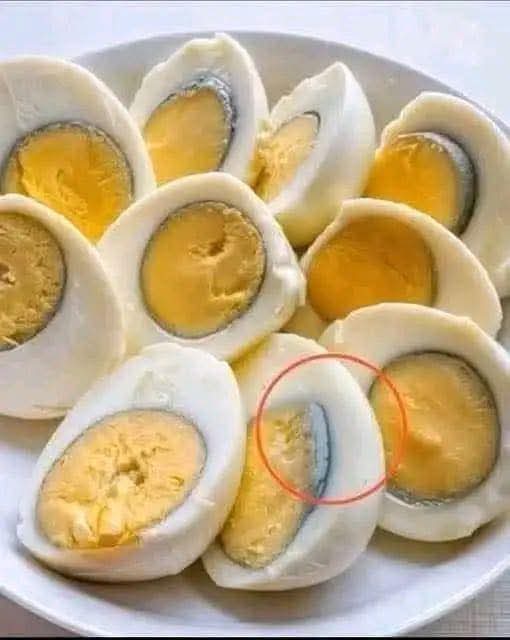
What the Green Ring Actually Is
The green or gray ring that forms around the yolk is a harmless compound called ferrous sulfide (iron sulfide). It forms when sulfur from the egg white reacts with iron in the yolk during cooking. This reaction creates a greenish-gray layer at the boundary between the white and yolk. Even though it looks unusual, it is completely safe to eat.
Why the Reaction Happens
1. Overcooking
The most common reason is cooking eggs too long. The more heat and time the egg is exposed to, the more sulfur is released, and the stronger the reaction becomes.
2. High, Rolling Boil
Boiling eggs aggressively at high temperatures causes more sulfur to form and react with iron, resulting in a darker ring.
3. Slow Cooling
If eggs are not placed into cold water immediately after boiling, the residual heat continues to produce hydrogen sulfide, making the green ring worse.
4. Egg Age
Older eggs have a higher pH and release sulfur more easily. They tend to develop the green ring faster than very fresh eggs.
5. Iron in Water
Sometimes water with high iron content increases the reaction and makes the ring more pronounced.
Is the Egg Safe to Eat?
Yes. The green ring is harmless and safe to eat. It does not indicate spoilage or contamination. The only downside is that overcooked eggs may be slightly rubbery with a stronger sulfur smell, but they are still edible.
What the Green Ring Tells You
A green ring usually means:
- The egg was cooked at too high a temperature
- It cooked for too long
- It wasn’t cooled quickly enough It is a sign of cooking technique, not egg freshness or safety.
How to Prevent the Green Ring
Use these steps to keep your egg yolks bright yellow: Use proper cooking time (about 9–12 minutes for large eggs) Avoid boiling rapidly during the entire cook time Cool eggs immediately in ice water after boiling Use eggs that are not too old If your water is high in iron, try filtered water Peel eggs close to serving time for the best appearance
Important Clarifications
The green ring is: Not spoilage
Not bacteria
Not a sign of a bad egg
Not related to brown vs. white egg shells
Not caused by peeling or cookware
The Science Behind It (Simple Version)
When eggs heat up: Proteins in the white break down and release hydrogen sulfide (H₂S) This gas moves toward the yolk The yolk contains iron Hydrogen sulfide + iron = ferrous sulfide, the green ring
Common Scenarios
Boiled too long → dark green thick ring
Cooled slowly → faint ring
Older eggs → green color more likely
Stored peeled eggs overnight → ring may darken
Green ring + bad smell → discard (this means actual spoilage, not the chemical ring)
Summary
The green ring forms when sulfur from the white reacts with iron in the yolk due to overcooking, high heat, or slow cooling
It is completely safe to eat
It is a cosmetic issue, not a health one
Cooling eggs quickly and not overcooking them prevents the ring