
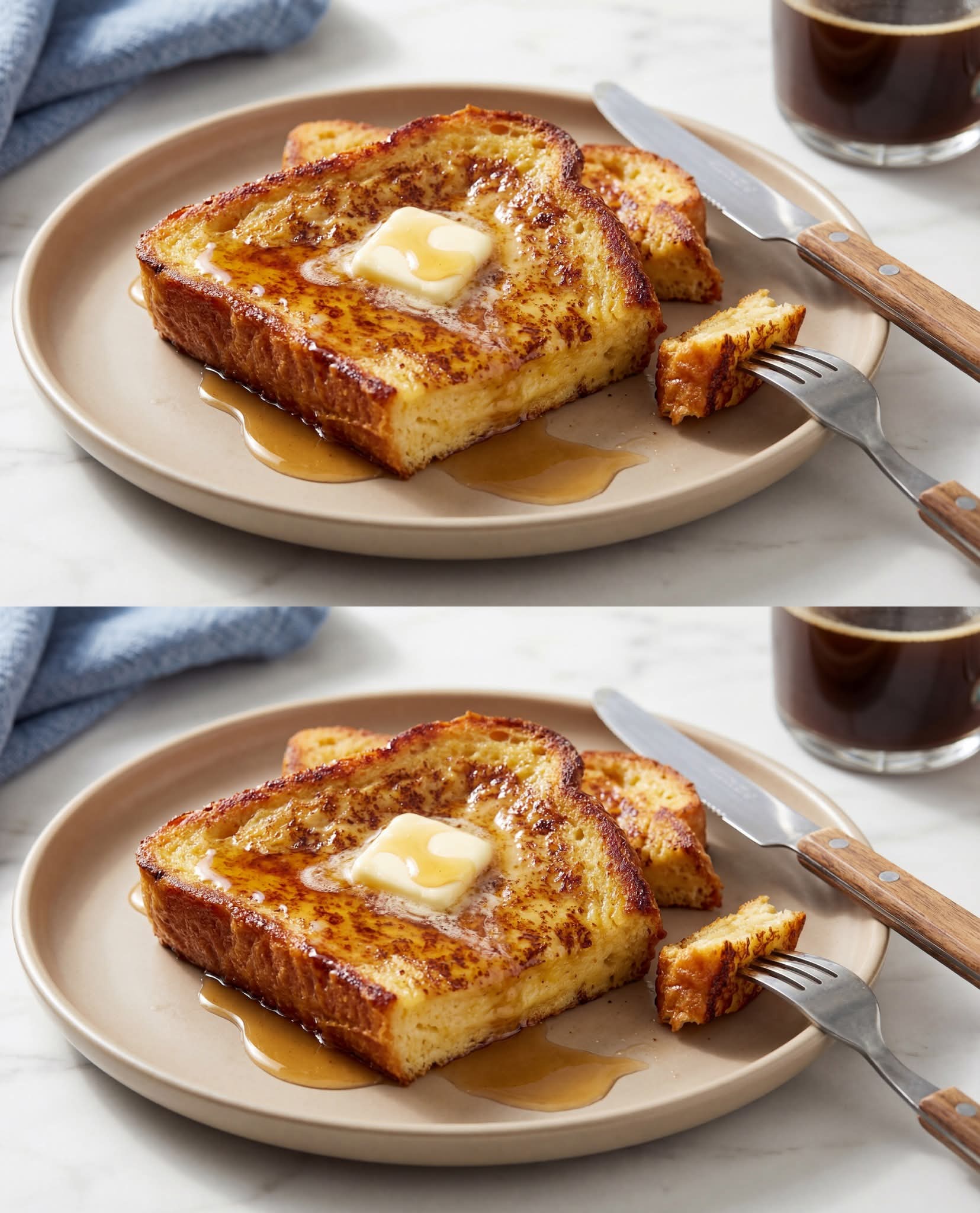
There’s a reason French toast transcends breakfast. It’s culinary alchemy: humble bread transformed into something golden, aromatic, and deeply comforting. Crisp at the edges, custardy in the center, infused with vanilla and warm spice. When done right, it’s unforgettable. When done wrong, it’s soggy, rubbery, or bland.
This is the definitive method, refined and reliable, designed to deliver perfect French toast every single time. Whether you’re cooking for a quiet morning or a full table, this approach ensures rich flavor, proper structure, and flawless browning.
Step 1: Choose and Prepare the Bread
The bread is the foundation. Get this wrong, and no technique can save the result.
Best Bread Choices
Brioche or challah provide richness and a tender crumb thanks to butter and eggs.
Country-style sourdough offers structure with a subtle tang.
Texas toast is thick, sturdy, and beginner-friendly.
What to Avoid
Thin sandwich bread collapses easily.
Fresh bread holds too much moisture and turns mushy.
Proper Preparation
Slice bread ¾ inch thick for even soaking and cooking.
Use bread that’s 1–2 days old for best absorption.
If using fresh bread, dry it in a 300°F (150°C) oven for 10–12 minutes until dry but not toasted. Let cool completely before soaking.
Step 2: Make the Custard
This custard creates the flavor, texture, and richness that define great French toast.
Custard Ratio for One Loaf (8–10 slices)
5 large eggs, room temperature
1 cup half-and-half
2 tablespoons packed light brown sugar
1 teaspoon pure vanilla extract
½ teaspoon ground cinnamon
¼ teaspoon freshly grated nutmeg
¼ teaspoon fine sea salt
Technique Matters
Whisk vigorously for one full minute until completely smooth.
Strain through a fine-mesh sieve for a silky, lump-free custard.
Pour into a shallow dish to allow even soaking.
Step 3: Soak with Precision
This step determines texture more than any other.
Submerge two slices at a time.
Soak for 30 seconds per side, no more than 60 seconds total.
Press gently to ensure absorption without tearing.
Lift and place on a wire rack, not a plate.
The bread should feel heavy but intact, moist without dripping.
Step 4: Cook to Golden Perfection
Proper heat control is essential.
What You Need
A nonstick or cast-iron skillet
Medium-low heat
1 tablespoon unsalted butter plus 1 teaspoon oil per batch
Cooking Method
Preheat the skillet until butter foams.
Add soaked bread and cook 4–5 minutes per side.
Flip only once.
Cook until deeply golden and set through the center.
Transfer finished slices to a wire rack on a baking sheet to maintain crispness.
Step 5: Finish with Intention
Serve immediately for best texture.
Classic Finish
Warm pure maple syrup
Salted butter
Light dusting of powdered sugar
Elevated Options
Vanilla bean whipped cream
Fresh berries with lemon zest
Toasted pecans with honey
Pear-ginger compote
Salted caramel
French toast shines brightest when contrast is respected: richness balanced with acidity, crunch, or freshness.
Troubleshooting Guide
Soggy Center
Cause: Over-soaking or undercooking
Fix: Limit soak time and cook until center is set
Rubbery Texture
Cause: Too much egg, not enough dairy
Fix: Stick to the proper egg-to-dairy ratio
Pale and Greasy
Cause: Skillet not hot enough
Fix: Preheat fully and wait for butter to foam
Burnt Outside, Raw Inside
Cause: Heat too high
Fix: Lower heat and cook longer
Make-Ahead and Scaling Tips
Custard can be made one day ahead and refrigerated.
Soaked bread can rest on a rack in the fridge for up to 2 hours.
For large batches, bake soaked slices at 375°F (190°C) for 25–30 minutes.
Conclusion
Perfect French toast isn’t complicated. It’s deliberate.
It’s choosing the right bread.
Respecting the custard.
Soaking with care.
Cooking with patience.
When you do, the result is more than breakfast. It’s comfort, warmth, and craft on a plate.
Golden. Custardy. Worth slowing down for.
Now go make French toast the way it deserves to be made.