
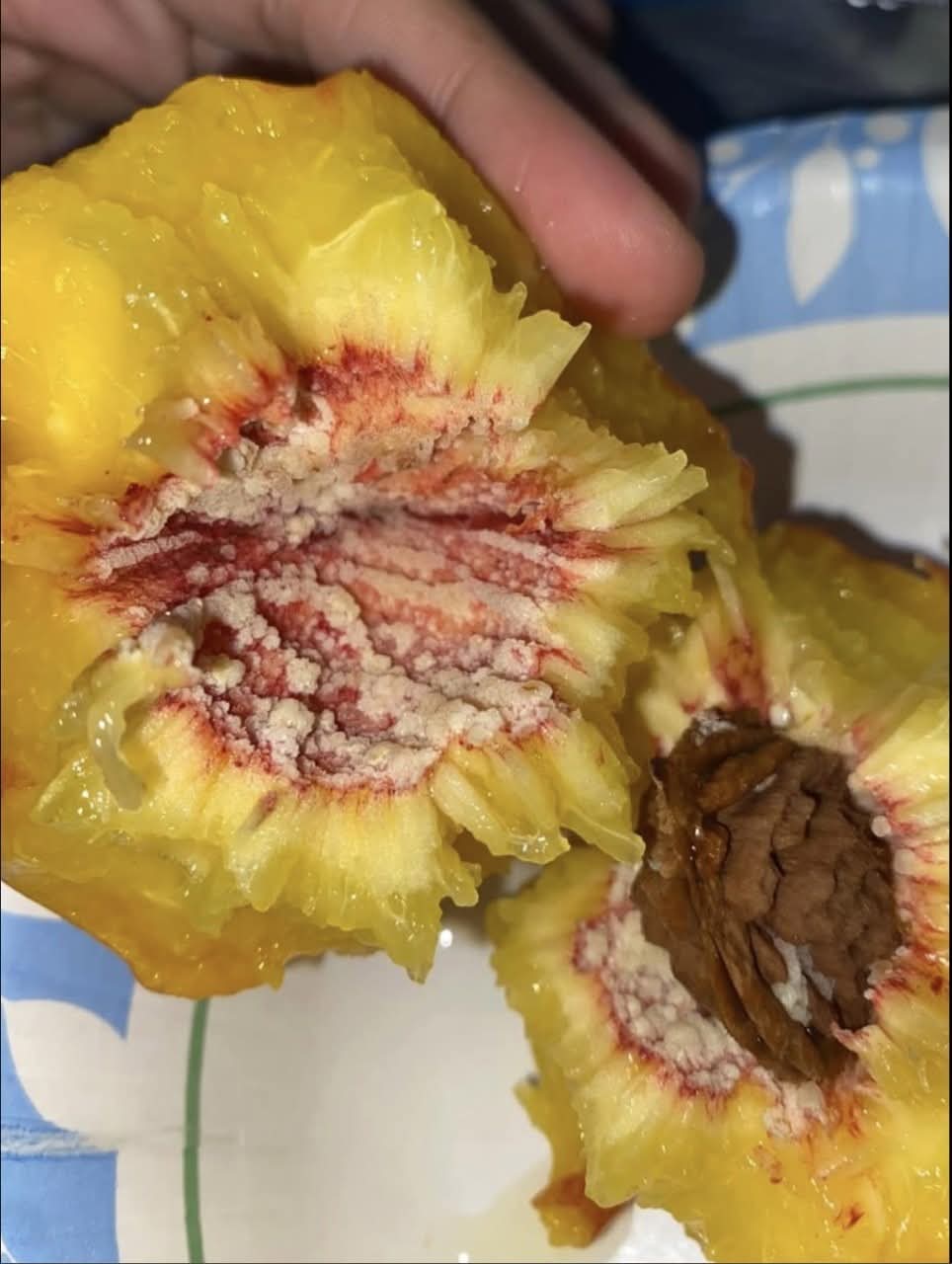
When you bite into a sweet, juicy peach and discover a patch of white, fuzzy material on the pit, it’s normal to feel a moment of panic. You might wonder whether it’s mold, whether the peach was spoiled, or if it’s unsafe to eat.
The good news? In most cases, this white substance is harmless and completely natural.
What the White Stuff Actually Is
Most of the time, the white, cotton-like material found on a peach pit is caused by a natural yeast condition known as cottony leak, typically associated with a yeast species called Pichia membranifaciens.
This is not the same as mold that grows on spoiled fruit, and it doesn’t mean the peach was unsafe to eat.
Key Characteristics of Cottony Leak
• Color: White, cotton-like, sometimes webby
• Location: Usually inside the crevice of the pit, not on the fruit flesh
• Smell: Neutral or mildly fermented — never rotten
• Fruit condition: Flesh remains firm, sweet-smelling, and unaffected
If the white substance is only on the pit and the flesh is normal, the peach was generally safe to eat.
Why It Happens
Peaches are stone fruits with hard pits that sometimes develop tiny cracks. These openings allow moisture to collect inside the pit’s crevice. In warm or humid environments, natural yeasts found on the peach surface can multiply in that trapped moisture.
This yeast growth is harmless — similar to the wild yeasts used in sourdough.
When You Should Be Concerned
Although cottony leak is harmless, there are situations where white growth or changes inside the peach indicate spoilage.
Warning Signs to Watch For
• White fuzz on the fruit flesh
This is mold — do not eat.
• Slimy, mushy, or darkened flesh
Indicates spoilage.
• Strong sour, alcoholic, or rotten smell
A sign of decay.
• Pit leaking brown fluid or heavily cracked
Possible internal rot or pest issues.
Bottom Line
If the flesh looks and smells fresh, and the white stuff is limited to the pit, it was fine to eat.
If the fruit flesh is affected, discard the peach.
How to Reduce the Chances of It Happening
You can’t completely prevent natural yeast growth, but smart storage habits reduce the risk.
Tips for Keeping Peaches Fresh
• Eat peaches shortly after they ripen
• Store in a cool, dry place
• Refrigerate only after ripening
• Avoid sealed plastic bags — prevent trapped moisture
• Wash peaches before eating
• Discard bruised or split peaches before storing
• Allow airflow — don’t store peaches in airtight containers
Final Thoughts
The white material on a peach pit may look alarming, but in most cases, it’s simply a natural yeast growing in a moist corner of the pit. It doesn’t mean the fruit was spoiled or unsafe.
By checking the flesh, trusting your senses, and understanding what you’re looking at, you can confidently enjoy your peaches without worry.